


Recycling Landfill Gas to Power Jones Island
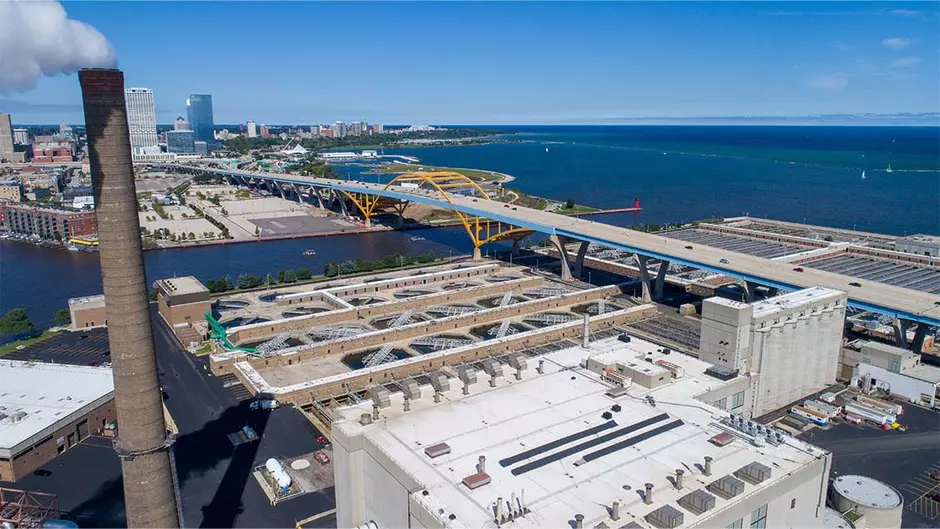
Landfill gas is being recycled into power and heat at the Jones Island Water Reclamation Facility. Using landfill gas instead of natural gas reduces our carbon footprint and helps customers save millions of dollars. By converting landfill gas into electricity, the plant produces most of the electrical power needed at Jones Island during dry weather. Heavier demand during wet weather still requires supplementing that electrical power production with purchased electricity. A 19-mile-long pipeline transports landfill gas from the Emerald Park Landfill in Muskego, Wisconsin, to the Jones Island Facility in Milwaukee. The mostly underground pipeline is 13.7 miles and connects to an existing 5.3-mile-long pipeline previously used for conveying petroleum products. Three turbines at Jones Island transform the landfill gas into electricity. They replaced a natural gas-burning turbine that was more than 40 years old. Large rotary kiln dryers at Jones Island can also combust landfill gas to produce heat and manufacture Milorganite® fertilizer.
Turning Digester Gas into Electricity
At the South Shore Water Reclamation Facility, large tanks digest the biosolids generated by the wastewater treatment process. Inside these digester tanks are mixing units that move the biosolids around to ensure good mixing and better energy production. During this process the volume of the biosolids are reduced and methane gas is produced. This gas is collected, cleaned and then burned in generators to create electricity.
Eco-Driving Training for Veolia Drivers
As part of our commitment to sustainability through improved fuel efficiency, Veolia Water Milwaukee and Wisconsin Clean Cities conducted an Eco-Driving training course for our fleet drivers. Combining classroom and behind-the-wheel training, it provided Veolia Water fleet drivers with the opportunity to learn new sustainable driving behaviors. This training helps increase miles per gallon of gas used, save on fuel, and decrease emissions for cleaner air.
Our fleet vehicles have been outfitted with a computerized fueling system that tracks vehicle miles, fuel consumption and vehicle hours. The data from the system will be analyzed on an ongoing basis for fuel consumption rates as an indicator of vehicle operations (driving behaviors) and engine condition.